
The Florida land trust is a legal way to protect the identity of a property’s true owner by creating a unique legal relationship between a trustee and a beneficiary. Property owners with large property holdings or who have name recognition with the public often seek ways to protect their anonymity. A land trust provides privacy of ownership, ease of management, isolation of liabilities, and easier transferability of ownership.
Contact us today to discuss how the land trust could work for you.

Once a land trust trustee is selected by the property holding beneficiary, the trustee will arrange to hold the legal title to the property. The legal document that makes this possible is the trust agreement between the trustee and the beneficiary.
The trust agreement spells out exactly what the trustee is permitted to do with the property, and when and how he can do those things. It is a very important document that gives the trustee extremely powerful, but well defined, authority to do what is necessary for the property. This is why it’s really important to choose a trustworthy trustee.
The trust agreement then allows the property ownership to be transferred to the trustee, and special state statutory language is included in the deed or mortgage to give public notice of the trustee’s authority over the property.
From this point forward, the trustee executes all purchase and sales contracts, leases, permit applications, notices of commencement and termination, and any other document related to the management and disposition of the property so long as the trust exists. The beneficiaries’ names are never made public except in rare circumstances that usually require a court order.
Land Trust Agreement:
My Land Trustee replaces the owner’s name on the deed and in public records.
My Land Trustee holds legal title to the property.
Receives, filters and forwards all communications related to the property to the beneficiaries.
Contact us today to discuss how a land trust could work for you.
Florida land trusts provide confidentiality of ownership because the only owner’s name that appears on the public records is the name of the trustee. It also provides segregation of liability by separating the ownership of the property from the current owner as well as that owner’s other properties and their liabilities. When someone searches the public records to see what real property you own, your name will not appear on the records. Only the trustee’s name appears. Therefore, if someone with an intent to sue you for a breach of contract, negligence, or other cause of action, their asset search prior to litigation will make it appear that you have no assets from which to satisfy a judgment, making you look like a less valuable target.
Each property should be held in an individual trust instead of holding every property owned in one umbrella trust. Think of it as putting one egg (piece of property) in one basket (trust). If one trust is breached, only that “egg” breaks.
And a note about holding property in an LLCs as opposed to a trust. A Florida LLC doesn’t provide anonymity of ownership, because the owner’s name typically appears on the Division of Corporation’s www.Sunbiz.org website as either a manager or member of the company. And, often, LLCs cost more to establish and maintain than a land trust.
There are several important considerations to make before moving property from an individual’s name into a trust or an LLC. We feel it is our job to educate property owners on these considerations before they decide a trust is right for them:
You can no longer prosecute evictions pro se (without an attorney). You can file it with the owner’s (trustee’s) written authorization, but if the tenant responds, or a hearing is required for any reason, you must engage an attorney to appear in court on the owner’s behalf.
You will have to obtain a new hazard insurance policy, since the insured’s name is changed. You will no longer be able to obtain liability insurance coverage that is coupled with hazard insurance coverage. If you want separate liability coverage, you would need to purchase a more expensive separate premises liability policy.
If the properties are moving from one owner to multiple LLC’s, directly or as beneficiaries within the trusts, there is a chance that this could increase the annual tax return preparation fees substantially, depending on how it is structured. You would want to discuss it with your tax adviser before doing so.
With the land trust, you will lose day-to-day control over the management of the property. You will no longer sign the listing agreements, leases, permit applications, or contracts for work to be conducted on the property. All of that will be signed instead by the trustee. This means that all documents regarding the property must be sent to the trustee with written direction as to what to do with them before they can be executed and returned to the recipient. Also, this could lead to a trust issue with potential tenants who are reluctant to enter into a lease and pay rent to a person whose name does not appear on the public records of the property.
Moving property into a land trust or even an LLC in one of the “secret” jurisdictions like Nevada, New Mexico, Wyoming, or Delaware, is not a foolproof way to maintain your confidentiality to the extent that the IRS is concerned. The Service must be alerted to your ownership in the property, whether that is through a Form 56 filed with the Service upon formation of the trust, or filing your subsequent person tax returns where income, losses, and expenses of the property are reported.
The land trust is intended to keep the beneficiary’s name out of Public Records (as defined in Florida Statutes). It is not intended to keep your name out of private records such as the IRS, utility companies, HOA bookkeeping records, insurance company records, etc. The beneficiary will pay those bills directly, so — yes – there may be an internal record in those companies and government agencies regarding who paid their bill. For this reason, if a beneficiary doesn’t want their name to appear even in these otherwise non-public records, they can set up an “operating company” with its own bank account and use checks from that company’s account to pay bills. The same operating company can be used to receive rents from tenants on rental properties or other income from properties held in the trust. We can set up that LLC for a beneficiary in one of the “secret” jurisdictions like Wyoming or Delaware, or we can set up a Florida LLC with a manager trust so their name doesn’t appear on Sunbiz. However, even then, the beneficiary’s bank (under the Federal Know-Your-Customer rules), FinCEN (under the BOI report requirements), and the IRS (under Form 56) will all know the identity of the ultimate beneficial owner of the trust. There is no legal way to prevent that from happening.
While we make a point of bringing these considerations to our clients when they’re thinking of moving properties into trusts or LLC’s, most still do it. The segregation of liabilities or anonymity of ownership (in the case of land trusts) is more important than these issues.
Once a land trust trustee is selected by the property holding beneficiary, the trustee will arrange to hold the legal title to the property. The legal document that makes this possible is the trust agreement between the trustee and the beneficiary.
The trust agreement spells out exactly what the trustee is permitted to do with the property, and when and how he can do those things. It is a very important document that gives the trustee extremely powerful, but well defined, authority to do what is necessary for the property. This is why it’s really important to choose a trustworthy trustee.
The trust agreement then allows the property ownership to be transferred to the trustee, and special state statutory language is included in the deed or mortgage to give public notice of the trustee’s authority over the property.
From this point forward, the trustee executes all purchase and sales contracts, leases, permit applications, notices of commencement and termination, and any other document related to the management and disposition of the property so long as the trust exists. The beneficiaries’ names are never made public except in rare circumstances that usually require a court order.

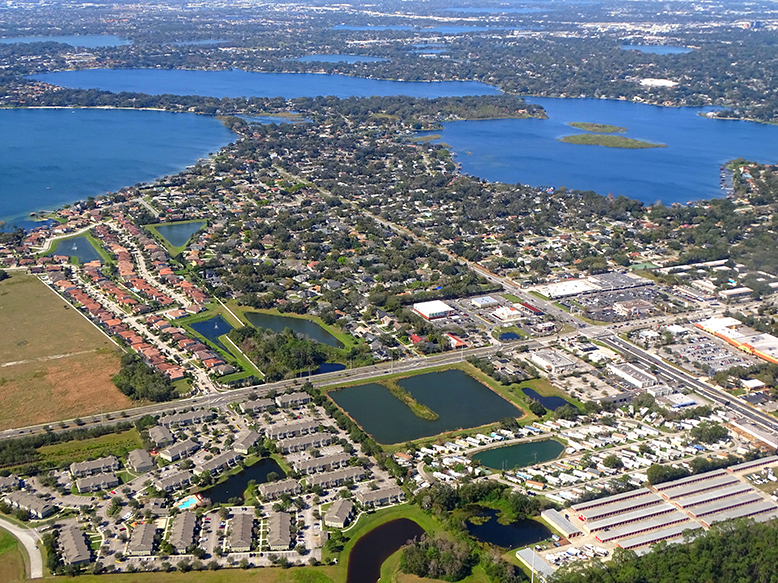
One of the most famous cases of using a land trust for anonymity is the land purchased for a place considered the most magical place on Earth. Shortly after the Florida Land Trust Act was passed, a number of trustees started buying large tracts of land in central Florida.
Eventually, these tracts connected to become what we now know as Disney World. If neighbors would have known that a large enterprise like Disney was buying up the area, they would have demanded much higher prices for their land.
Officials within the criminal justice system—such as police officers, prosecutors, and judges—also seek anonymity from those looking to do them harm.
Conventional Mortgages & Land Trusts

According to Freddie Mac LPA (Loan Product Advisor) guidelines, a land trust must meet the following conditions:
1. A trustee must hold the legal and equitable title.
2. The beneficiary’s interest in the trust is considered personal property.
3. At least one beneficiary must be listed as a borrower on the mortgage.
4. The property must be a primary residence, second home, or an investment property where the beneficiary is a borrower.
5. The beneficiary (homeowner) must have full control over property management, renting, and selling.
Suppose you are purchasing a property and planning to use a mortgage from a conventional (not FHA, VA, USDA, or commercial) lender, and you want to purchase the property into a land trust. In that case, not all lenders will allow it, even though Fannie Mae and Freddie Mac both have guidelines that specifically permit it. To help smooth the process, there are certain actions you can take during the purchase process to make it easier for the mortgage loan underwriter to review and approve the loan:
1. Use a corporation licensed in the state where the property is located to act as the trustee of the land trust. In this case, our company – Land Trust Service Corporation – should meet the lender’s underwriting guidelines since it is a Florida corporation that is and has been engaged exclusively in the business of acting as a land trustee for many years in the state of Florida.
a. On your purchase contract, list the buyer as “____________ Land Trust with Land Trust Service Corporation as its trustee,” and send the contract to us for execution.
b. Alternatively, sign the contract in your name as the buyer, but add this clause to your contract in the additional provisions section:
i. Buyer will take title to the Property in a Florida land trust pursuant to F.S. 689.071. Seller agrees to execute a deed to “Land Trust Service Corporation as trustee of _____________ Land Trust” and include the powers of the trustee to deal with the property.
2. When you make your loan application, be clear with your loan processor and loan originator (broker) that you will be taking title into a land trust, and that they check the proper box on the loan application for this.
3. When you apply for homeowner’s insurance, make sure that the insurance agent understands how title to the property will be held. The “insured” will be “____________ Land Trust with Land Trust Service Corporation as its trustee. The beneficiaries of the land trust should be listed as additional insureds, and the lender will be listed as a loss payee. The insurance company may issue two policies: one for liablity and one for hazards, but – so long as the names of the insureds and loss payees are correct, this should be acceptable to the lender.
4. Contact our office as early in the process as possible so that we can work with your real estate broker and mortgage loan originator to ensure they have the proper documentation for the land trust information that the mortgage underwriter will need to review.
5. Note that you must individually be the beneficiary of the land trust. Fannie Mae and Freddie Mac guidelines require that at least one human “borrower” is a beneficiary of the land trust holding title to the mortgaged property.
a. If you are married, we usually recommend that the spouses hold the beneficial interest in the land trust as tenants by the entirety.
6. At closing, we will sign some of the closing documents while you will sign others. We sign remotely at our office before one of our in-house notaries.
7. The deed and mortgage will both be recorded with our name as trustee of the land trust that holds title to the property. Therefore, your personal names will not be on the Official Record as owners.
With all of that said, it must be remembered that “the one with the gold makes the rules.” Fannie Mae and Freddie Mac ultimately decide whether they will accept a loan where the security is held in an Illinois-type land trust. Freddie Mac’s rules are more detailed and allow for direct streamlined underwriting so long as the rules are followed, and proper documentation (the land trust agreement, direction to trustee, and collateral assignment) is provided during the application process. Fannie Mae’s rules are more nebulous and will require the loan underwriter to negotiate directly with Fannie Mae to see if they will accept the land trust loan. So, in short, it may be easier to do the loan in a land trust with Freddie Mac as the buyer of the loan, while Fannie Mae will take some finesse.
Both GSE’s will allow a borrower to borrow a conventional mortgage through a revocable living trust. In that case, we can create a land trust that “walks and talks” like a revocable living trust wherein you, the borrower, are the trustee and the beneficiary. The deed should be recorded in the name of the trust, so your name should still not appear or be searchable in the county’s property appraiser’s databases. After closing, we can prepare and record a designation of successor trustee where you will resign as trustee and appoint our corporation as the new trustee. At that point, our name is associated with the property as the trustee rather than yours, and all mail and other communications and legal documents related to the property will go through us to provide an additional layer of asset protection for you. However, you individually will remain as the beneficiary of the trust to preserve your rights as a borrower under your mortgage.
Our team ensures your land trust is structured correctly, keeping you compliant while protecting your privacy.
Using an entity owned by the beneficiary, or the beneficiary himself, to act as trustee of the land trust. Why? This defeats the privacy usually provided by the land trust.
Using a “friend” or employee to act as land trustee. Although it’s tempting to use someone you know, “trustworthy” friends and employee relationships sometimes go bad. Giving someone this power allows someone to steal the trust property or strip the equity out of it by using mortgages unknown to the beneficiary.
Improperly naming the trust as the buyer or seller in a real estate purchase and sale contract. With REO properties, this is especially troublesome when it comes time to close.
Putting multiple properties into the same land trust. Why? This defeats the purpose of using the land trust structure to isolate one property’s liabilities from another.
Providing copies of the land trust to third parties or recording the land trust document, i.e., not keeping the land trust agreement confidential. Why? Third parties can now discover the identity of the beneficiaries.
Investors waiting until they have a potential lawsuit pending before they look at using a land trust for asset protection and privacy. Why? Once legal action has been filed, it is too late for a trust to protect the asset’s privacy.